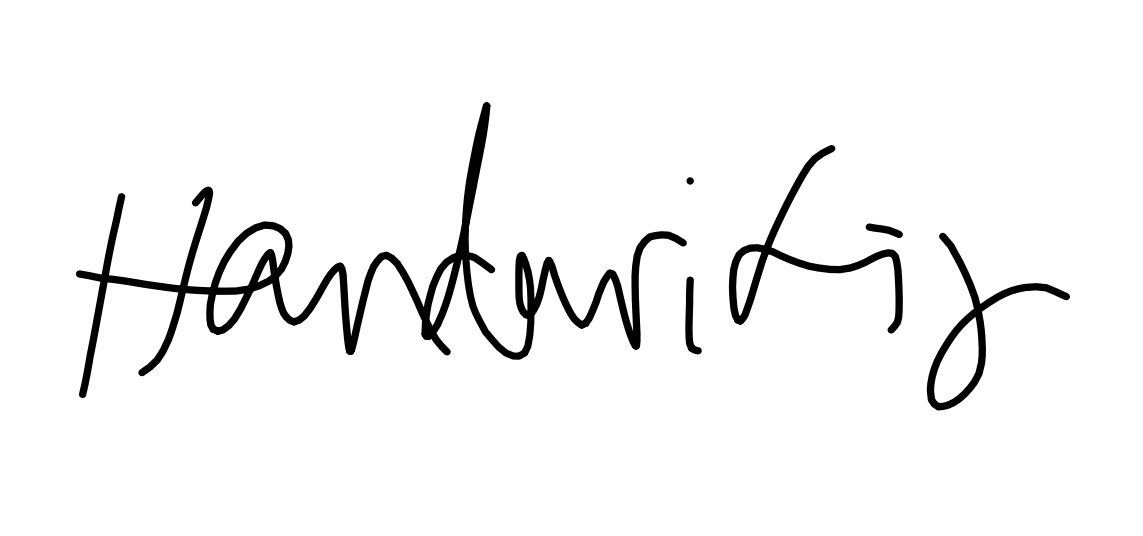
“Ink as warm as blood” – Neef (p.116 )1
Writing is an act of directly recording thought from brain to hand in real-time. It is an integral human communication tool – a practise that we all partake in everyday; encoding intentions, information and emotions on a range of surfaces and in a wide range of marks and shapes across our cultures.
In this first blog I am exploring our relationship to handwriting in the age of technology. The pace of modern life often prioritises typed writing for its quick, tidy and readily alterable qualities. There are many questions to ask here, such as – are we now writing by hand less than we have been? Is this a bad thing, a good thing or just a change? How does this alter the way we relate to writing in general? And lastly, what, if anything, are we losing in this seemingly declining mode of practise?
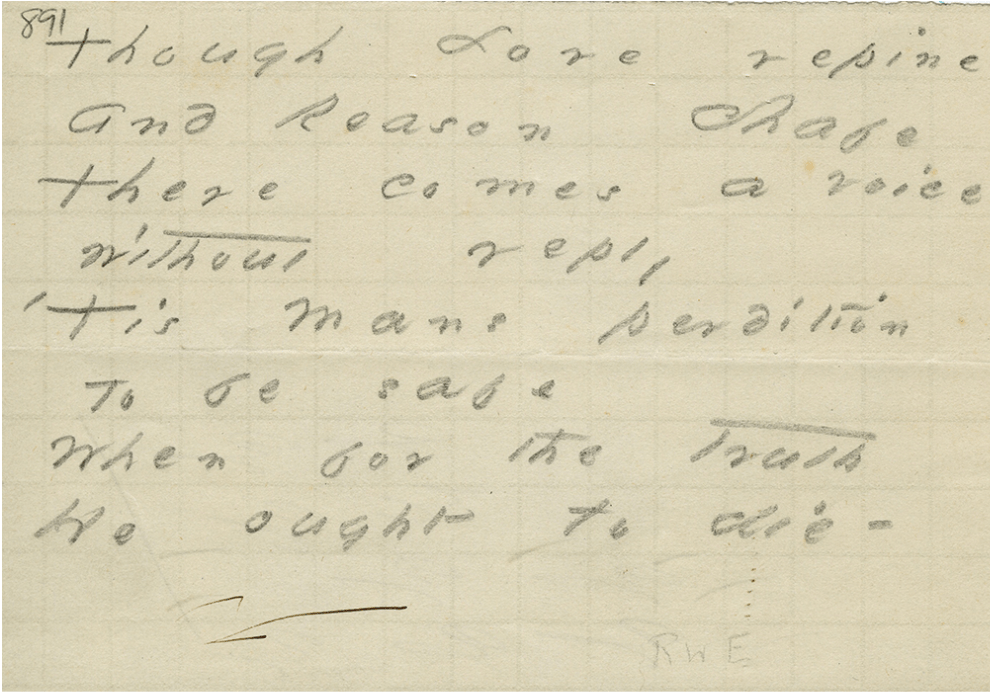
Handwriting is a ritualistic bodily act. For Neef, one of the most important elements in writing by hand is the trace – a line created by real-time choreography. She describes a ductus (a ‘lead’) in which the hand and arm form a physical relationship with the forms of the word combinations1. This can be imagined well in joined, cursive writing – your hand and thoughts move forward in motion together. This means that marks are made conscious to letters and words before and after.
Furthermore, the tangible materiality of handwriting is important. The marks created are imprinted, dented and etched from the pressure of the writing tool into the page, and are to an extent, unerasable. The thought is tied to a specific physical space1.
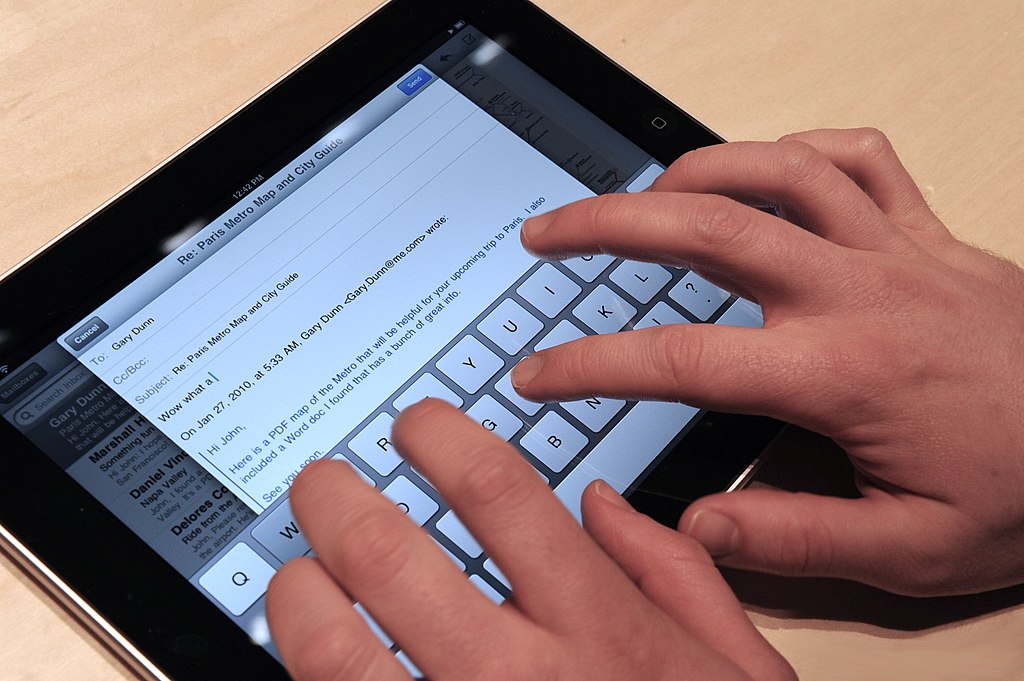
Writing digitally, with a keyboard, is a completely different experience. Shapes and marks are reduced to buttons via discrete, repetitive, and punching finger movements. Discrete letters are instantaneously delivered by algorithm and withdrawn with the same ease- no material trace is left that cannot be completely removed with a few clicks.
Mangen highlights some important differences between writing by hand and writing by keyboard. Experimental research in psychology and neuroscience finds that participants have better visual memory and recall of information they have handwritten rather than typed, due to the link between fine-motor and cognitive processes (e.g., James and Gauthier, 2006; Kiefer, et al., 2015; Longcamp, Boucard, et al., 2006; Longcamp, et al., 2008, as cited in: Mangen, 20082). As we write by hand, our attention is focused on the tip of the pencil, thus creating “close temporal and spatial contiguity of visual attention and motor input”2. This attention to movement extending from an extremity is not present in typing, where attention is split between fingers (motor input location) and a monitor. If typers are more proficient, most of their focus may be on the monitor, which creates a more “phenomenologically detached” experience2.
In investigating typing in the context of human-computer interaction, some interesting ideas can be brought in from cyber anthropology. In the detachment of the hand from the formations of letters, we can discuss physical disembodiment. Handwriting distinctly ties the body to a communication. In typing, the body escapes the physical implications of mark making- the words are detached from the body3. They are “words without bodies” 4. Does use of this mode of writing make us post-human? Tufecki writes that such use of technology makes us very much human – it is part of the symbolic and embodied nature of our humanity. In externalising and freezing what emanates from our mind we are acting in our symbolic nature. Therefore, the movement to the use of computer interface to write is no different to the invention of writing nor the paleolithic cave paintings4 – writing technologies have always been changing5.
However, I think that in this step in writing technologies, this overlooks the loss of our bodily information from words. Autography encodes personal information, from your grip to the way you were taught to write at school6, to the anatomical and motor capabilities of your hands.
In this digital age of writing, we become nostalgic of the traditions of handwriting from history. Whilst our writing technologies have always been changing, the jump between the two modes of writing seems big. The handwritten is deeply personal; we are more engaged in the words both motorily and visually. It seems natural that like in common speech we gesticulate and make visual movements with our hands that we would do the same when recording speech on a surface. However, I think that as we become more aligned to navigating the world through digital technology, we adapt, and shift our priorities.
References:
- Neef, S. (2010). Imprint and Trace: Handwriting in the Age of Technology, Reaktion Books.
- Mangen, A. (2018). Modes of writing in a digital age: The good, the bad and the unknown. First Monday. Accessible at <https://journals.uic.edu/ojs/index.php/fm/article/view/9419> [Accessed 26 Feb 2020].
- Pietro, R (2018). Cyber-Anthropology and Human-Computer Interaction: The Reshaping of Nature and Culture in a Technology-Mediated World. Medium. Accessible at <https://medium.com/@pietroromeo/cyber-anthropology-and-human-computer-interaction-the-reshaping-of-nature-and-culture-in-a-3a4d8a7486> [Accessed 15 Apr 2020]
- Tufekci, Z. (2012). We Were Always Human. In WHITEHEAD N. & WESCH M. (Eds.), Human No More: Digital Subjectivities, Unhuman Subjects, and the End of Anthropology (pp. 33-48). Boulder, Colorado: University Press of Colorado. Accessibled at < www.jstor.org/stable/j.ctt4cgr5j.5> [Accessed 15 Apr 2020]
- Clayton, E (n.d.). The evolution of writing – 5000 BC to today. British Library. Accessible at <https://www.bl.uk/history-of-writing/articles/the-evolution-of-writing> [Accessed 22 Feb 2020]
- Morris, R., & Morris, R. N. (2000). Forensic handwriting identification: fundamental concepts and principles. Academic press.
 Anthropology of Handwriting

2 thoughts on “Handwriting in the Digital Age”